
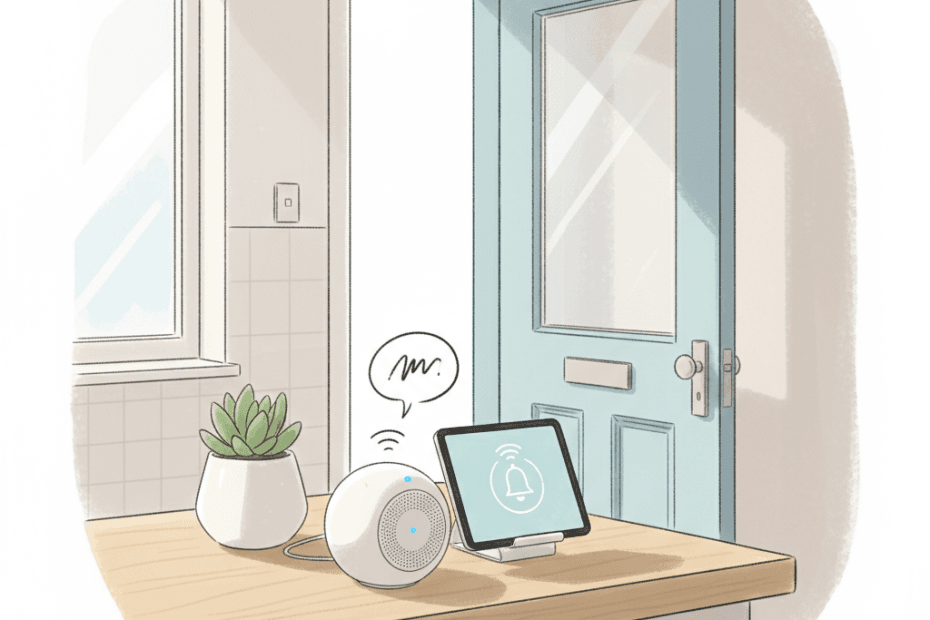
If you already use a Ring doorbell or camera, there is a fair chance you have had the same small domestic thought at least once: lovely app notification, shame I was nowhere near my phone when someone actually arrived. That is where Ring Chime (3rd Gen) comes in. It is a simple plug-in device designed to play audible alerts around your home when someone presses your Ring doorbell or when motion is detected.
This is not a hands-on test and we have not used Ring Chime in our own home for this piece. Think of it as a practical desk-based shopper review, based on Ring’s current product information, setup guidance and delivery terms. The aim is to help you work out whether it looks genuinely useful, or whether it is just one more small gadget hoping to squat in your plug socket.
On that basis, Ring Chime looks like a sensible add-on for people who already like the Ring ecosystem but want louder, clearer alerts indoors without relying entirely on a phone. Piglington’s view: not glamorous, not revolutionary, but potentially very handy if your current doorbell routine involves missing parcels and muttering.
What Ring Chime appears to be
Ring Chime (3rd Gen) is a mains-powered indoor accessory that plugs straight into a standard electrical socket. Its job is pleasingly straightforward. When linked in the Ring app, it can play a sound when someone rings your doorbell and, if you want, when motion is detected by selected Ring devices.
Ring says the newer model brings louder, clearer alerts, Bluetooth-assisted setup, adjustable volume, customisable tones and snooze options. The product page also notes that each Ring account can support up to 10 Chime devices, which suggests it is aimed not only at flats and smaller homes but also at larger houses where a single hallway ding may not reach the back room, upstairs office or kitchen where real life actually happens.
Who it may suit best
This looks most useful for existing Ring households, especially people who already have a video doorbell and want a more reliable in-home alert than a mobile notification alone. If your phone is often on silent, buried in a bag, or mysteriously absent exactly when the courier appears, a plug-in chime has obvious appeal.
It may also suit homes where the front door is a fair way from the main living space, or where multiple people need to hear alerts without all sharing one app login. If you work from home, have a larger property, or just want the doorbell to behave a bit more like a traditional doorbell again, Ring Chime looks like a tidy fix.
It may be less appealing if you do not already use Ring gear, or if you specifically need a more advanced extender-style accessory rather than a straightforward sound alert. In that case, it is worth comparing the plain Chime with Ring’s pricier Chime Pro before buying.
What looks reassuring
Setup appears intentionally simple. Ring’s support guidance describes the process in very plain terms: plug it in, open the Ring app and follow setup. The addition of Bluetooth for connecting to your wifi network should make the first setup feel less fiddly than older smart-home kit that behaves like it was designed during an argument.
The controls sound genuinely useful, not decorative. Ring says you can choose different tones for different events, adjust volume, select which devices trigger the chime and use snooze settings when you want temporary quiet. That means the device looks flexible enough to be helpful without turning every movement near the front path into a full domestic percussion solo.
It fits naturally into the wider Ring ecosystem. Ring’s support pages say the Chime can be linked to Ring Video Doorbells, Security Cameras and Ring Intercom devices at the same location. For shoppers already invested in Ring, that broad compatibility is a real plus.
The returns position is clearer than many gadget brands manage. Ring says UK orders over £40 get free delivery, orders under £40 cost £3.95, and customers have 30 days from receipt to request a full refund. That is reassuring for a modest add-on purchase where you may want to try it in the real rhythms of your home rather than guess in advance.
Possible drawbacks or watch-outs
It is only useful if you already have compatible Ring devices. This is not a standalone smart-home bargain. It earns its place only as part of an existing Ring setup.
Indoor use only. Ring states that Chime is designed for indoor use, so this is one for a hallway, kitchen, landing or home office rather than a porch or outdoor socket.
Check your wifi setup. The current product information lists 2.4 GHz Wi-Fi 6 support, so it is worth making sure your home network setup is straightforward enough for the device to join happily. Ring’s Bluetooth-assisted onboarding should help, but smart-home products do occasionally reserve the right to become temperamental precisely when you thought this would be a five-minute job.
It solves an audio problem, not every delivery problem. A chime can help you hear someone at the door, but it does not replace good camera positioning, app settings or sensible motion zones. Useful, yes. Magic, no.
What to check before buying
First, make sure the problem you are trying to solve is genuinely about hearing alerts indoors. If your issue is poor wifi reach, a different Ring accessory may make more sense. If your issue is simply not hearing the doorbell in another room, Chime looks much more on point.
Second, think about placement. Because it plugs into a socket, it works best where there is an available outlet in a useful listening spot. A brilliant chime hidden behind a shoe rack next to the vacuum charger is still, sadly, hidden behind a shoe rack next to the vacuum charger.
Third, check whether one Chime will do or whether your home really needs more than one. Ring says you can connect multiple Chime devices, which could be worthwhile in taller or wider homes where one alert point may not be enough.
Verdict: is Ring Chime worth a closer look?
Yes, if you already use Ring and want a simpler, more audible way to hear what is happening at home. Ring Chime (3rd Gen) looks like a practical, low-effort accessory rather than an overcomplicated gadget, and that is largely a compliment. The clearer audio, custom tones, app linking and straightforward setup all make sense for the job it is meant to do.
The main limitation is also the obvious one: its value depends entirely on whether your Ring setup already exists and whether indoor sound alerts would genuinely improve daily life. If the answer is yes, Ring Chime looks well worth shortlisting. If not, this may be one more neat little plug-in box that ends up losing a turf war with the toaster.